
Why Don’t Mental Health Treatments Always Rely on Medication?
Where do drug treatments reach their limits?
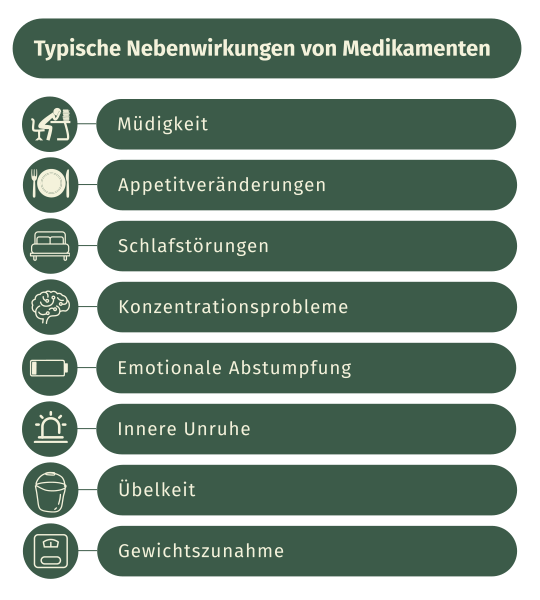
Medication can be helpful for mental health issues in certain cases. However, it is not always the right solution, nor is it the only one. Depending on the symptoms, side effects may occur, and not every treatment addresses the underlying causes of mental distress.
Furthermore, medication often merely alleviates symptoms without automatically teaching new coping strategies. Particularly when distressing thought patterns, inner conflicts or persistently stressful life circumstances are involved, complementary therapeutic approaches are frequently required.
When can non-pharmacological approaches be particularly beneficial?
Non-pharmacological approaches can be particularly useful when mental health issues need to be addressed in a targeted and sustainable manner. These include, for example, anxiety disorders, depressive symptoms, internal stress or stress reactions following difficult experiences. Therapeutic counselling, body-oriented approaches or creative methods can help people to better understand the underlying connections, develop new ways of coping and strengthen their mental stability in the long term.
Psychotherapeutic Approaches: Specifically Addressing Thoughts, Feelings and Behavioural Patterns
Individual and group therapy as key components of treatment
Individual and group therapy provide a framework for addressing psychological distress in a targeted manner. Whilst personal issues, conflicts and symptoms can be addressed more intensively in an individual setting, the group setting offers additional insights through discussion, feedback and shared therapeutic processes. These two forms of treatment are also part of our range of therapeutic services.
Behavioural therapy approaches for anxiety, depression and mental overload
In cases of anxiety, depressive symptoms or persistent mental strain, the aim is often to recognise distressing patterns of thought and behaviour more clearly and to change them gradually. Psychotherapy can help with this,
- To gain a clearer understanding of triggers and stress patterns
- to improve the way we cope with stress and tension
- to regain a sense of stability in everyday life
Trauma therapy approaches for traumatic experiences
Traumatic experiences can have a lasting impact and significantly affect how people experience their day-to-day lives. Trauma-focused therapeutic approaches are therefore an important part of the treatment we offer. The focus is on supporting those affected to,
- to come to terms with traumatic experiences in a gentle way
- to restore one’s sense of security
- to cope better with inner tension and emotional overwhelm
Body-Oriented and Stabilising Approaches
Body-oriented psychotherapy and the connection between body and mind
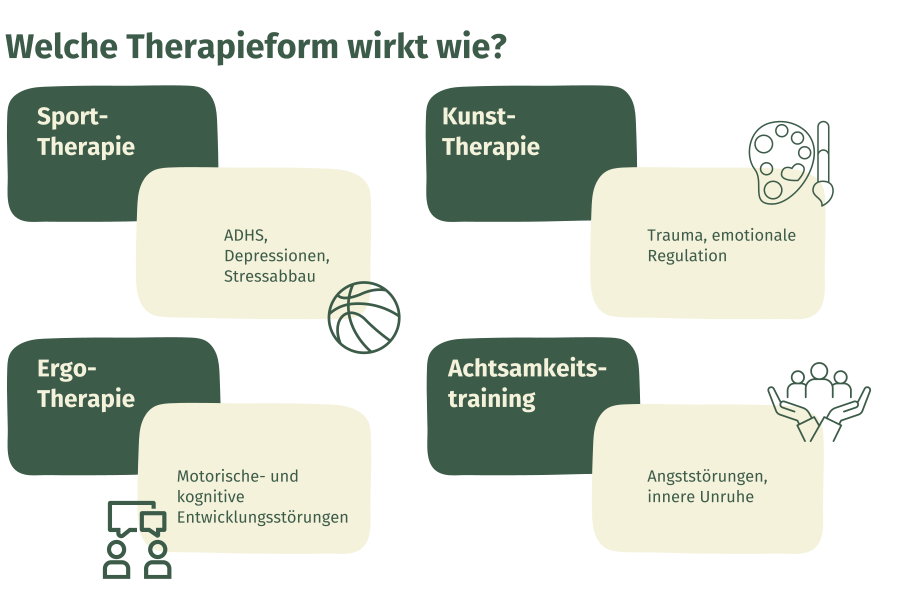
Psychological stress often manifests itself not only in thoughts and feelings, but also physically. Tension, inner restlessness or exhaustion can make themselves clearly felt in the body. This is precisely where body-oriented psychotherapy comes in: it consciously incorporates physical experiences into the therapeutic process and can help patients recognise tension at an earlier stage and improve their awareness of their own bodily sensations.
Exercise, relaxation and mindful body awareness
Complementary techniques can help you regain stability and become more aware of your own body. These include movement-based activities as well as gentler exercises that provide relief and strengthen self-regulation.
Depending on requirements, various factors may come into play:
- Exercise and stimulation
can help you reconnect with your own body and break through entrenched states of stress. - Mindful awareness
: Calmer exercises help you to recognise tension at an earlier stage and deal with it more consciously. - Stabilising practices such as yoga
can help to reconnect the body, emotions and thoughts more closely.
Find out more about the types of body therapy available at the Verus Libori Clinic.
Creative and Complementary Forms of Therapy
Art and music therapy as forms of non-verbal expression
Art and music therapy offer a way of expressing feelings, tensions and inner conflicts in a different way. This can be particularly relieving when it is difficult to put one’s struggles into words, or when conversation alone is not enough to gain access to one’s own experiences.
Art therapy creates a creative space in which inner issues can come to the surface. The focus is not on the artistic outcome, but on the process itself. Colours, shapes and creative work can help to express feelings that would otherwise remain rather vague or difficult to pin down.
Music therapy draws on sounds, rhythm and musical expression. It can help people to recognise their moods, regulate inner tension and set emotional processes in motion. Precisely because music is not tied to language, it can open up a different way of addressing psychological distress.
Pain management and complementary therapies as part of a holistic approach
If mental stress and physical symptoms are closely linked, it may be advisable to supplement the treatment with additional approaches. These include, in particular:
- Pain management supplemented by TCM
can play an important role when mental and physical symptoms are closely interlinked. Such an approach helps to ensure that symptoms are not viewed in isolation, but that the wider context is taken into account more fully. - Complementary practices such as yoga
. Such activities can help to improve body awareness, reduce inner restlessness and restore a better balance between tension and relaxation. At the same time, they encourage a more mindful approach to stress and pressure.
When used in conjunction with psychotherapeutic approaches, creative and complementary methods can help to broaden the scope of treatment and better address individual needs.
Applying Therapy to Everyday Life
How social relationships and one’s personal environment can provide stability
Mental health issues often affect not only one’s own experience, but also relationships, communication and everyday life with other people. Conversely, a supportive environment can help to restore stability and consolidate therapeutic progress.
Above all, it is important that those affected do not isolate themselves from others because of their difficulties. Understanding support networks, supportive conversations and an environment that offers backing can make it easier to cope with difficult periods. The aim is not to shoulder every burden in one’s private life, but rather to consciously strengthen supportive relationships.
Find out more about the range of treatments offered by the Verus Libori Clinic.
Daily routine, self-care and practical support with everyday tasks
In everyday life, it is often not major changes that help, but reliable, realistic steps. These might include, for example:
- Fixed daily routines that provide structure and guidance
- deliberately scheduled rest periods to prevent burnout
- small, achievable goals rather than constantly setting the bar too high
- regular exercise or short routines that help stabilise the day
At first glance, such measures may seem simple, but they are often crucial in everyday life. They can help you regain a clearer overview, a greater sense of security and a greater sense of self-efficacy.
How can therapeutic approaches be integrated into everyday life?
For the therapy to bring about lasting change, you need to incorporate new approaches into your own life. This usually doesn’t happen all at once, but step by step. It is helpful not only to understand the insights gained in therapy, but also to translate them into concrete behaviour. This may involve paying closer attention to warning signs in everyday life, trying out new ways of responding, or regularly incorporating helpful exercises into your routine. The better therapeutic concepts can be integrated into your own life circumstances, the more likely it is that long-term changes will result.
FAQ: Frequently Asked Questions About Non-Pharmacological Treatment Approaches
Which form of therapy is best suited to which type of psychological distress?
There is no one-size-fits-all answer to this. The key factors are always the symptoms, their severity and the individual’s personal circumstances. Depending on individual needs, psychotherapeutic counselling, individual or group therapy, trauma-focused therapies, body-oriented approaches or creative therapies may be appropriate. At the Verus Clinic, we therefore use a range of treatment methods that can be tailored to each individual’s needs.
Can non-pharmacological approaches be an effective alternative to medication?
In many cases, yes. However, the recommended treatment always depends on the nature and severity of the symptoms. For depression, depending on its severity, treatments may include self-help measures, psychotherapeutic approaches and medication; psychological therapies are regarded as evidence-based treatment options and are widely recommended for depression and anxiety disorders.
How do I find a suitable form of therapy?
It is important to have your symptoms professionally assessed first and then to consider which setting and which methods are best suited to your particular situation. For adults, we offer, amongst other things, psychotherapy, individual and group psychotherapy, art therapy, music therapy, body-oriented psychotherapy, trauma therapy, pain management and complementary therapies. An early consultation can help you to clarify the next steps in a meaningful way.