Introduction
For many people, social media is an integral part of everyday life. Platforms such as Instagram, TikTok, Facebook and LinkedIn facilitate interaction, inspiration, entertainment and quick access to information. At the same time, they can take a psychological toll when comparisons, constant availability, sensory overload or negative online experiences become overwhelming. That is why the impact of social media on mental wellbeing is increasingly coming under the spotlight – both in private life and in therapeutic contexts.
In this article, we aim to provide you with an overview of how social media use can affect mental health. Firstly, we will look at when social media use is still unproblematic and at what point it can become a burden. We will then look at possible warning signs, as well as mental health issues that may be exacerbated by intensive or stressful use. Finally, we will outline the support options available and how treatment at the Verus Clinic can help.
It is important to note that not all intensive use of social media is automatically problematic. The key factor is whether digital content is noticeably affecting daily life, sleep, self-esteem, social relationships or emotional stability. If those affected notice that they are feeling increasingly exhausted, restless, low or dependent on constantly checking their smartphone, professional support may be advisable. The Verus Clinic offers personalised, expert treatment that takes mental health issues seriously and works with patients to develop ways to achieve greater stability and inner balance.
Find out more here about the therapeutic approach at the Verus Libori Clinic.
Healthy Use vs. Problematic Use of Social Media
Not all frequent use of social media is automatically a cause for concern. What matters is not so much the sheer amount of screen time, but rather whether one’s use of Instagram, TikTok, Facebook or other platforms remains under control. Are you able to take breaks? Do your sleep, concentration, social interactions and everyday responsibilities remain stable? Or is there a growing feeling that you must always be available, constantly comparing yourself to others or reacting to what’s happening?
When is it safe to use social media?
A healthy approach to social media does not mean avoiding digital platforms altogether. Rather, it is about ensuring that use remains conscious, manageable and compatible with other areas of life. Social media can inform, entertain or facilitate socialising, but it should not permanently dictate the rhythm of one’s day.
Typical characteristics of unproblematic use are:
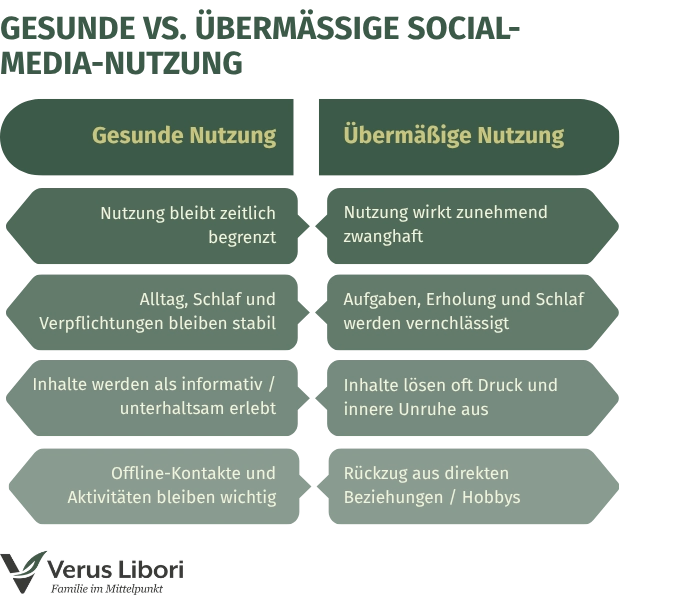
- A conscious decision rather than an automatic response: social media is used in a targeted way, for example for information, communication or entertainment. You don’t constantly open your smartphone without thinking, simply because you happen to have a spare moment.
- Plenty of space for relaxation and everyday life: work, study, personal commitments, exercise, relaxation and sleep remain possible. Digital content does not take up so much space that important routines suffer as a result.
- Stable mood after use: Scrolling does not regularly lead to feelings of inner restlessness, inferiority, envy or exhaustion. Use does not have a lasting negative impact on self-image and well-being.
What are the signs of excessive or overuse?
Social media can become problematic when it becomes increasingly difficult to control its use, or when it serves as a constant escape from unpleasant feelings. Even if those affected realise that they are less present in their own daily lives, this can be a sign of an unfavourable development.
Possible warning signs include:
- Putting off important tasks: Appointments, work commitments, studies, household chores or personal projects are often pushed into the background because social media keeps getting in the way.
- A strong urge to be online: Those affected very often reach for their smartphone, check their notifications almost automatically, or feel anxious when they are unable to access social media for a while.
- Sleep and daily rhythms become unbalanced: in the evenings, we spend longer scrolling than planned; our mobile phones are within easy reach at night; or the day begins with us immediately checking social media.
- Less interest in offline experiences: Activities that used to be enjoyable are becoming less important. People are taking part in face-to-face meetings, hobbies or exercise less frequently.
- Withdrawal despite digital connections: Although there is a great deal of interaction online, face-to-face conversations and genuine closeness are on the wane in everyday life. This can exacerbate loneliness, emotional distance or social insecurity.
Tips for using social media responsibly
A healthy approach to social media does not usually develop on its own. Many platforms are designed to keep users’ attention for as long as possible. This makes it all the more important to be mindful of how you use them and to regularly question your digital habits.
The following measures, for example, may be helpful:
- Set specific times for social media use rather than being constantly available: Deliberately set aside specific times when you use social media. Outside these times, it can be a relief to switch off notifications or not have apps constantly to hand.
- Incorporating screen-free periods into your daily routine: Certain times of the day are particularly well suited to taking a break from digital devices, such as straight after getting up, during meals or before going to bed. Routines like these can help you regain a sense of calm and mindfulness.
- Monitor your own reactions: Pay attention to how you feel after using social media. If social media frequently triggers feelings of pressure, restlessness, envy, anxiety or low mood, it may be a good idea to spend less time on certain content or accounts.
- Strengthening offline contacts and activities: Face-to-face conversations, exercise, hobbies and periods of rest provide an important counterbalance to the digital world. They help to foster emotional stability and social connections outside of social media.
A mindful approach to social media can help you reap its benefits without causing long-term strain on your mental well-being. However, if your use becomes increasingly difficult to control, or if symptoms such as sleep problems, restlessness, withdrawal or depressive moods worsen, you should seek support at an early stage. In such cases, professional help can assist in identifying the causes and regaining a sense of stability in your daily life.
You can find more interesting articles on mental health on our blog.
How Can Social Media Affect Mental Health?
Mental health issues caused by social media
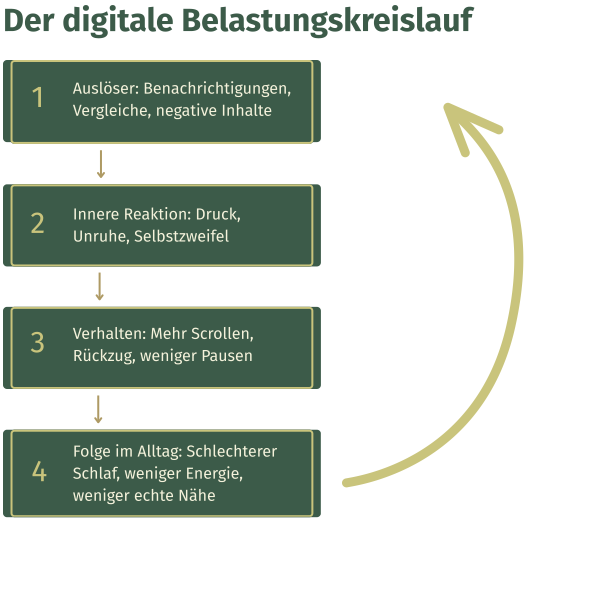
Social media can connect people, inform them and entertain them. At the same time, it can exacerbate psychological pressure if it consistently triggers stress, a sense of comparison, insecurity or negative experiences. It becomes particularly stressful when digital content leaves little room for detachment and its use is emotionally charged.
- Belittlement, conflicts and digital abuse: insults, public humiliation, exclusion or threats can be particularly distressing online because they spread quickly and those affected often find it difficult to escape them. Negative experiences in the digital space can therefore have lasting effects even beyond the platforms themselves.
- Comparisons with seemingly perfect lives: Much of the content shows curated snippets of everyday life, the body, success, relationships or lifestyle. People who regularly compare themselves to this content may find it easier to doubt themselves or develop a feeling of not being good enough.
- Constant connectivity and the fear of missing out: news, comments and new content often create the impression that we must constantly respond or stay informed. This feeling can increase inner tension and make it difficult to enjoy genuine periods of rest.
- Sensory overload and emotional exhaustion: short videos, news items, opinions and images flash by at breakneck speed. The constant barrage of information can be overwhelming, make it difficult to concentrate and cause those affected to feel irritable, tired or restless more quickly.
Possible mental health issues and disorders
If the stresses mentioned persist over a longer period, they can exacerbate mental health problems or contribute to the development of conditions requiring treatment. Social media is not usually the sole cause, but it can intensify existing stresses.
- Depressive symptoms: Constant self-criticism, negative feedback or a feeling of social exclusion can contribute to low mood, hopelessness and self-doubt. This can also exacerbate social withdrawal and a lack of motivation.
- Anxiety disorders: The fear of being judged, excluded or inadequately informed can fuel inner turmoil and anxiety. For some people affected, social media can also exacerbate social insecurity or the fear of criticism.
- Symptoms of stress and burnout: Constant notifications, always being on call and a lack of digital breaks can contribute to sleep problems, difficulty concentrating, irritability or exhaustion.
- Eating disorders and body image issues: Being exposed to idealised body images, diet trends or heavily edited images can exacerbate dissatisfaction with one’s own body. In individuals with a predisposition, this can contribute to problematic eating patterns or existing eating disorders.
Possible long-term consequences for everyday life, self-image and relationships
If social media becomes a constant source of stress, this can affect various areas of life. Those affected often find their daily lives less self-determined because digital content, comparisons or notifications take up so much of their time. Sleep, concentration, productivity and relaxation can all suffer as a result.
One’s self-image can also change. People who regularly compare themselves with seemingly ideal lifestyles may become less aware of their own strengths, achievements or relationships. At the same time, personal contacts in one’s immediate circle may lose their importance, even though interaction continues to take place online.
Support at the Verus Libori Clinic
At the Verus Libori Clinic, we support patients whose daily lives are affected by mental health or psychosomatic conditions. Problematic use of social media can also play a role here – for example, when pressure to compare oneself with others, constant availability, sleep problems, social withdrawal or inner restlessness affect mental stability.
In a safe, inpatient setting, those affected can gain some perspective, better understand the pressures they face and develop new strategies together with the therapeutic team. The aim is not merely to treat individual symptoms, but to take a holistic view of the individual’s personal circumstances.
Find out more about the Verus Libori Clinic in Todtmoos and the range of treatments we offer.
Our approach: personalised, scientifically based and holistic
Treatment at the Verus Libori Clinic is based on a holistic understanding of mental health. Mental health issues are considered in the context of the interplay between the body, the mind, a person’s life story, relationships and current stressors.
This perspective can be particularly important when dealing with the pressures of social media. Issues such as stress, loneliness, low self-esteem, anxiety or depressive moods often lie behind excessive use, constant comparison or digital withdrawal.
Therapeutic support for mental health issues
To provide targeted treatment for mental health issues linked to digital stress, the pressure to compare oneself with others or social withdrawal, the Verus Libori Clinic offers a range of therapeutic approaches:
- Individual and group psychotherapy:
Psychotherapy can help you work through distressing thoughts, feelings and behavioural patterns. Individual sessions allow you to explore your personal triggers, whilst group therapy can encourage discussion, offer new perspectives and provide a sense of social security. - Body-oriented psychotherapy:
Stress, tension and feeling overwhelmed often manifest themselves physically. Body-oriented psychotherapeutic techniques can help you become more aware of your body’s signals, regulate states of tension and reconnect with yourself. - Art and music therapy:
Creative therapies provide a way to address inner conflicts when words alone are not enough. They can help people to express their feelings, strengthen their self-awareness and come to terms with distressing experiences. - Trauma therapy:
Where distressing online experiences, bullying, threats or past traumatic experiences are a factor, trauma therapy can help you develop a greater sense of inner security and gently come to terms with distressing memories. - Complementary therapies:
Complementary approaches such as relaxation or mindfulness-based techniques can help to reduce stress and improve one’s ability to cope with inner restlessness, sleep problems or emotional overload.
FAQ
How much social media is still healthy?
It is difficult to set a blanket time limit, as the impact of social media depends heavily on how it is used. The key factor is whether social media complements everyday life or increasingly dominates it. Problems can arise if sleep, concentration, rest, work commitments, studies, relationships or personal interests suffer as a result.
It is therefore less helpful to ask about a fixed number of hours, and more useful to ask: Do you feel informed and connected after using social media – or rather restless, exhausted, under pressure or downhearted? If social media regularly triggers negative feelings or seems almost impossible to control, it is worth taking a critical look at your own use.
What warning signs might indicate that social media is causing psychological distress?
Warning signs can manifest themselves emotionally, physically and behaviourally. These include, for example, inner restlessness, irritability, mood swings or a strong urge to be online all the time. Sleep problems, difficulty concentrating, withdrawal or an increasing tendency to compare oneself with others can also be indicators.
This usage becomes particularly noticeable when social media can no longer be managed freely. Anyone who puts off important tasks, neglects real-life social contacts or regularly feels worse after scrolling should take a closer look. If feelings of depression, anxiety, low self-esteem or exhaustion become more pronounced, seeking professional support may be advisable.
What can help when social media becomes a burden?
A first step could be to observe your own usage more consciously. It helps to set aside specific times without your smartphone, reduce notifications and deliberately limit stressful content or accounts. Regular offline routines, exercise, good sleep hygiene and face-to-face conversations can also help relieve stress.
However, if the stress persists or mental health symptoms increase significantly, help should be sought. The Verus Libori Clinic supports patients in understanding their individual causes, building mental stability and developing a healthier approach to digital stimuli.